LANGUAGE
A cable plant running PVC jacket extrusion at 180°C began seeing pitting on the screw and barrel after only eight months. The cause was not wear from friction, but hydrochloric acid vapor released by PVC decomposition. Rebuilding that extrusion line cost more than the planned annual maintenance budget. For plants processing PVC, PE, PP, or XLPE, the question is not whether chemical attack will happen, but how the machine is designed to survive it.
Core Conclusion: Chemical Resistance Is a Machine Design Feature
A chemical resistant extrusion machine is not just an extruder with a coating. It is a system where the barrel, screw, die, and conditioning components are selected and surface-treated for the specific polymer family you run. The correct combination can extend equipment service life by 30 to 50 percent and reduce unplanned downtime in aggressive environments. Every hour of unexpected stop also costs you the extruded wire length that should have been produced.
Core Principle: Why Chemicals Attack Extrusion Hardware
Polymers like PVC and XLPE release corrosive by-products when heated. PVC stabilizers can degrade into hydrogen chloride, which reacts with chromium in standard stainless steel. PE and PP are generally more stable, but additives, flame retardants, and crosslinking agents introduce their own aggressive chemistry. The extrusion machine must therefore be evaluated against three attack points:
Barrel and Liner
Bimetallic liners with nickel-based alloys resist chloride attack better than nitrided steel. The liner must match the polymer chemistry, not just the wear requirement.
Screw Geometry
Hard-chrome plating alone cracks under thermal cycling. A coated screw with a corrosion-resistant base metal is the better choice. The screw surface also needs a low-friction finish to prevent polymer degradation from shear.
Seals and Water Jackets
Cooling water with high chloride content can pit external water jackets. Stainless manifold and titanium seals solve this, but they must be specified at the time of order, not retrofitted.
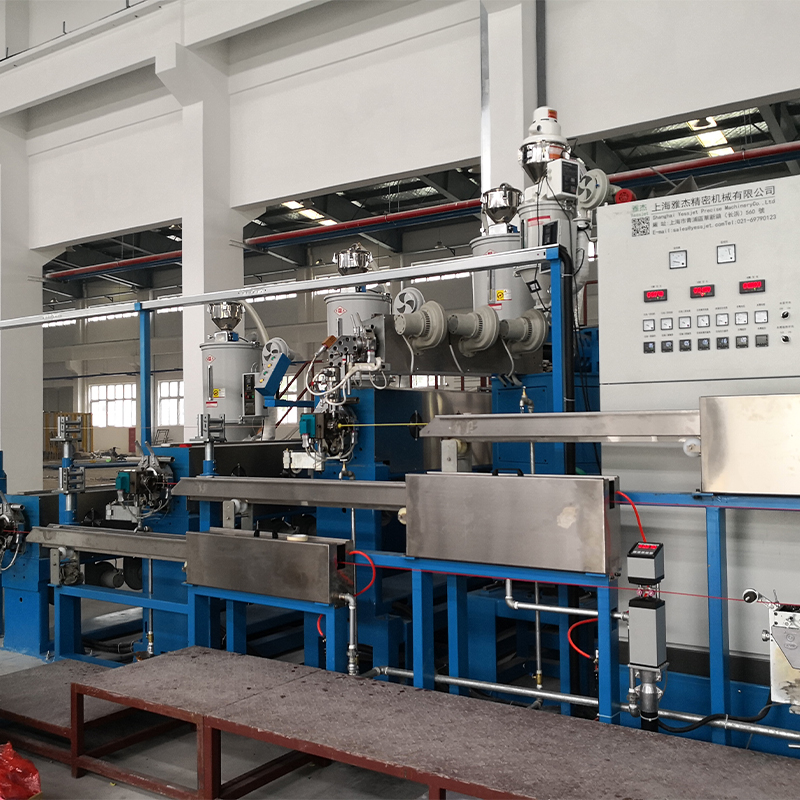 Full Auto PE PVC High-Performance Cable Extruder for Insulation and Jacket This integrated extruder specializes in continuous PE and PVC insulation and jacket extrusion, offering high speed up to 120kg/h and tolerance within ±0.03mm, suitable for power, communication, and automotive cables, and compliant with IEC and GB standards. View Product →
 For a PE/PVC extrusion line, the practical solution starts with a bimetallic barrel and a screw designed for the specific polymer. A machine that addresses these three points from the factory floor will deliver consistent output even when the recipe changes.
Data Comparison: Polymer Resistance vs. Machine Wear Risk
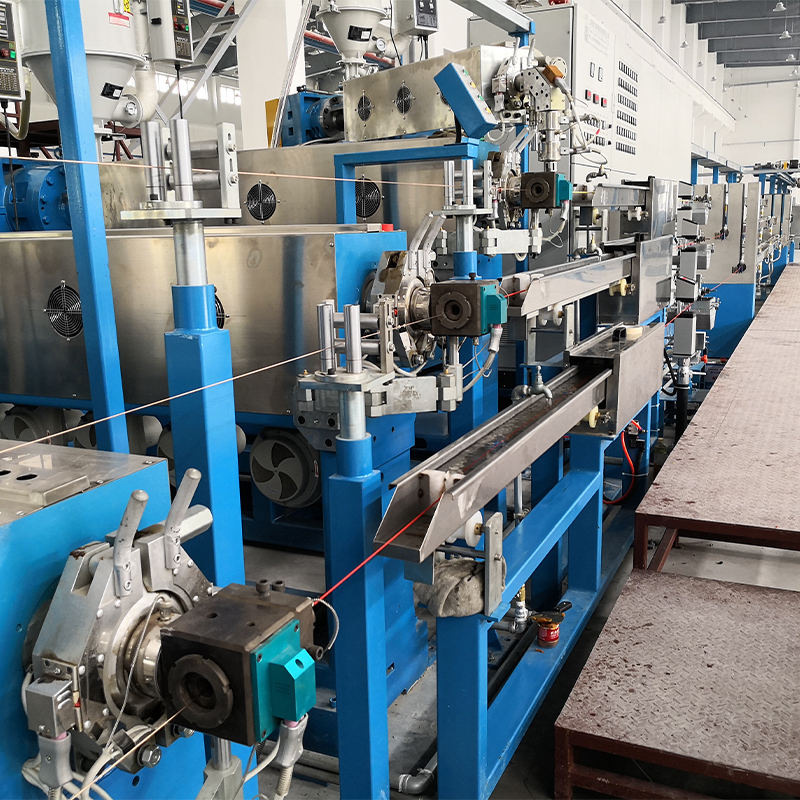 XLPE PE Cable Extruder with Cooling Water Tank for Stable Insulation Processing Engineered for XLPE and PE insulation, this extruder includes a temperature-controlled system and multi-section water tank to ensure uniform insulation thickness and efficient cooling, meeting IEC, GB, and ANSI standards for reliable cable production. View Product →
 The risk column is not only about material chemistry. It also reflects how long the polymer stays in the barrel. A machine with a water-cooled feed zone and precise temperature control reduces decomposition and, therefore, corrosive by-products. For XLPE production, a water tank design helps manage crosslinking heat and keeps the barrel temperature stable.
Hidden Indicators: Service Life Under Real Chemical Load
Standard test data may report "resistance" in a beaker, but the extrusion environment combines heat, shear, and continuous exposure. The chart below shows measured service life for a 45mm extruder barrel when processing PVC with 10% calcium-zinc stabilizer.
The 50% improvement from bimetallic to coated screw comes not from one magic alloy, but from preventing the initial pitting that causes screw surface roughness. Once roughness appears, polymer flow stops, heat builds, and the chemical attack accelerates.
Industry Application: Who Needs Chemical Resistant Extrusion
35% Power cable (XLPE)
25% Communication cable (PE)
18% Building wire (PVC)
14% Automotive cable
8% Specialty / industrial
Power cable plants process XLPE, which requires a machine with a water-cooled barrel section to manage crosslinking heat. Communication cable plants run PE at high speed, where mechanical wear takes priority. Building wire plants handle PVC, where the chemical attack is strongest. Your application determines the machine specification.
Selection Guide and ROI: From Chemical Environment to Machine Specification
Define your chemical load
List the polymer, including additives, stabilizers, and flame retardants. PVC with lead stabilizers is different from PVC with calcium-zinc.
Check temperature profile
A high melt temperature accelerates decomposition. Ask for a barrel with independent heating and cooling zones.
Require corrosion test data
Ask for salt spray or acid immersion reports from the barrel and screw supplier, not just a material certificate.
Plan for cleaning cycles
A purge compound and an easy-to-replace screen pack protect the barrel when switching materials.
ROI Example (PVC line, 7000 h/year)
A bimetallic barrel costs about 30% more than a nitrided barrel. With a realistic 4-year service life instead of 2.5 years, you save one barrel replacement plus 40 hours of unplanned downtime each year. At $300/hour lost output, the payback period is under 18 months.
For a full line, the extrusion machine is the heart, but the surrounding equipment also affects chemical exposure. Accumulator and dancer systems for continuous extrusion lines can reduce the number of stops and therefore the number of heat-up cycles that stress the barrel.
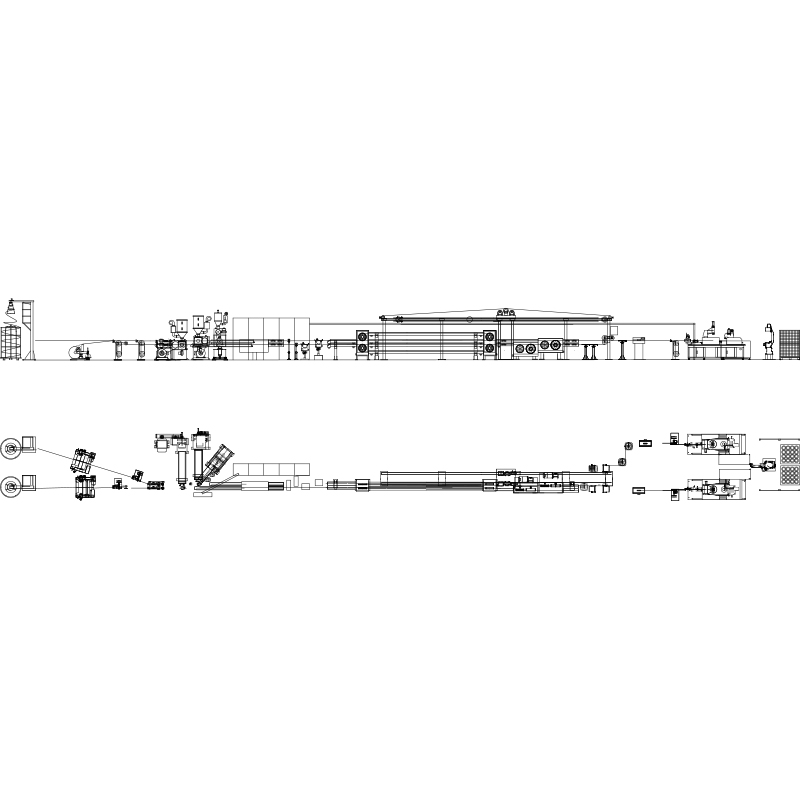 Complete Wire and Cable Extrusion Line with Integrated Cooling and Tension Control This automated line includes pay-off, extruder, cooling tanks, printing, and take-up units, with PLC and RKC temperature control, reducing stops and thermal stress while supporting PVC, PE, LSZH, Teflon, and nylon materials. View Product →
 A complete extrusion line with integrated cooling and tension control is often a better investment than a bare extruder when you need chemical resistance across the whole process.
Maintenance and Compliance: Protecting Your Investment
Even the best chemical resistant extrusion machine requires disciplined maintenance. Check the screw and barrel condition every 500 hours. Look for pitting on the screw flight tips and any discoloration on the discharge face.
- Run a neutralization purge after processing PVC or halogenated materials.
- Monitor cooling water quality and maintain a neutral pH to prevent external pitting.
- Use a torque limiter to avoid mechanical overload during cold start.
Compliance is not only about machine safety. The high-efficiency PP/PVC/PE cable extruder guide explains how matching the screw design to the polymer chemistry also reduces energy consumption and supports RoHS-oriented production. Document all material changes and cleaning records to maintain traceability.